The Occupier Blueprint Volume 1: The “Great Office Reset”

THE “GREAT OFFICE RESET”
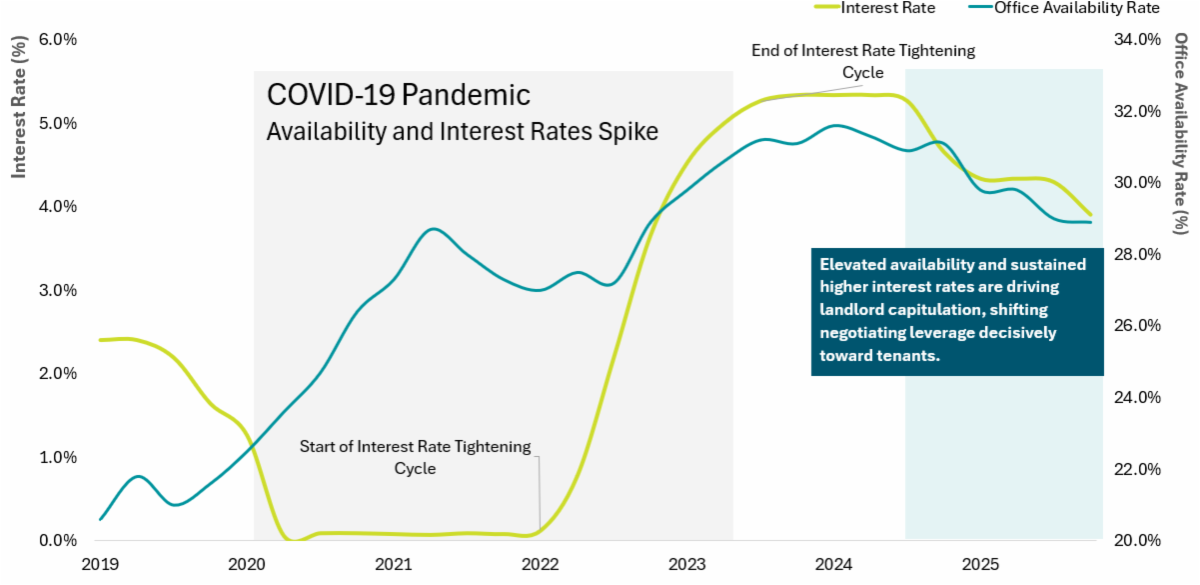
For decades, Atlanta’s office market, along with the associated pricing and other economic fundamentals, followed a relatively stable pattern for occupiers. Assets traded on the strength of long-term leases, predictable renewals, and the assumption that demand would normalize after cyclical disruptions. That framework began to break down after two back-to-back external forces reshaped the market: the COVID-driven shift in how office space is used, followed by one of the fastest interest-rate hiking cycles in modern history. Now, in addition, AI and how it will impact employment, is causing uncertainty when it comes to demand for office space. While “challenging” for landlords, these changes altered pricing dynamics across the office sector and introduced a clear opportunity for tenants.
Atlanta office availability vs interest rates
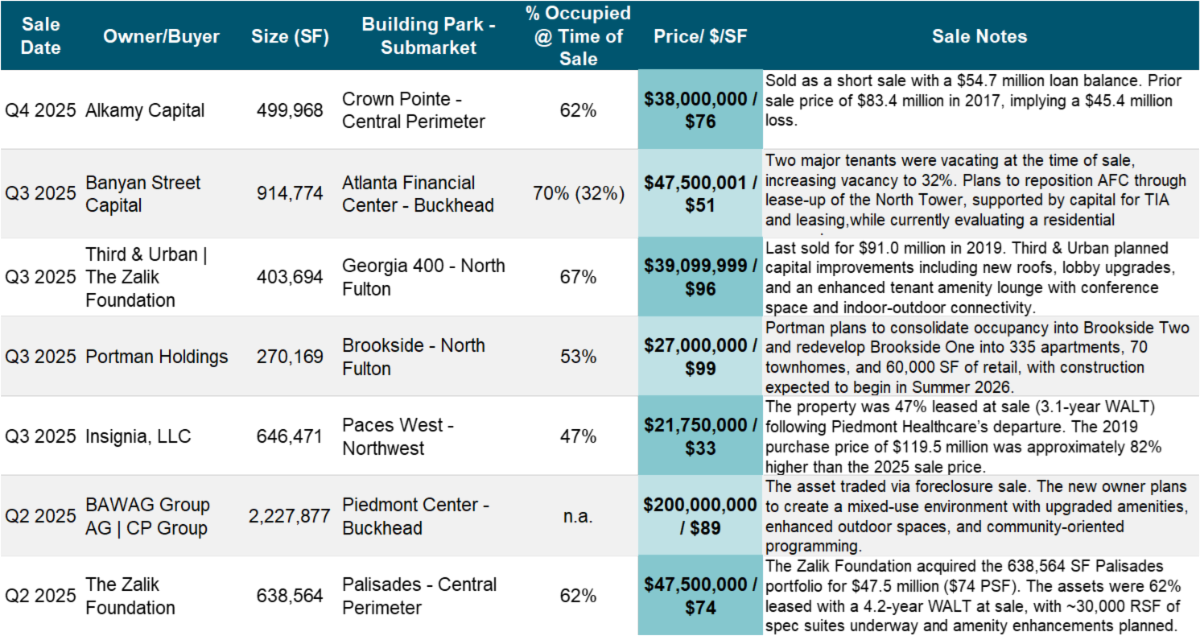
In 2026, a segment of the Atlanta office market is under sustained pressure from elevated vacancy, higher-cost debt approaching maturity, weakened demand, and outdated amenity offerings. This reset is evident in transactions like the Atlanta Financial Center, which sold in 2025 for approximately $50 per square foot. Just a few years earlier, comparable assets were trading near $250 per square foot—implying an estimated $175 million value decline for the landlord, Sumitomo Corporation.
For tenants, this repricing and resetting of the market has materially shifted negotiating leverage. New owners with lower cost bases and restructured capital stacks are incentivized to become aggressive in pursuing tenants and creating demand to stabilize buildings quickly, often prioritizing lease-up velocity over pushing rents. A lower basis allows landlords to offer more aggressive concession packages, flexible lease structures, building and amenity investments, and enhanced tenant improvement allowances. These are terms that tenants can now use not only in relocations, but as leverage against incumbent landlords in non-reset buildings.
What this means for your office strategy
Are you paying market rent based on yesterday’s pricing or today’s competition? Are you occupying a building that has already reset, is approaching a reset, or competing directly with a reset asset in your submarket? If your landlord hasn’t invested in amenities or capital improvements, are you leveraging the concessions from reset buildings to extract better economics in your current lease discussions?
These dynamics are highly building and ownership specific. As tenant-only advisors, our role is to identify where landlords are most motivated, model competitive concession scenarios across reset and non-reset assets and translate those dynamics into real leverage for occupiers. Whether you’re evaluating a renewal, relocation, or consolidation, understanding where pricing power truly sits can materially change the outcome—and we can help you apply it.
Recent select reset sales