
Sassy's U-Lock It
Closed3015 S Midland Dr, Pine Bluff, AR 71603
Little Rock-North Little Rock-Conway, AR
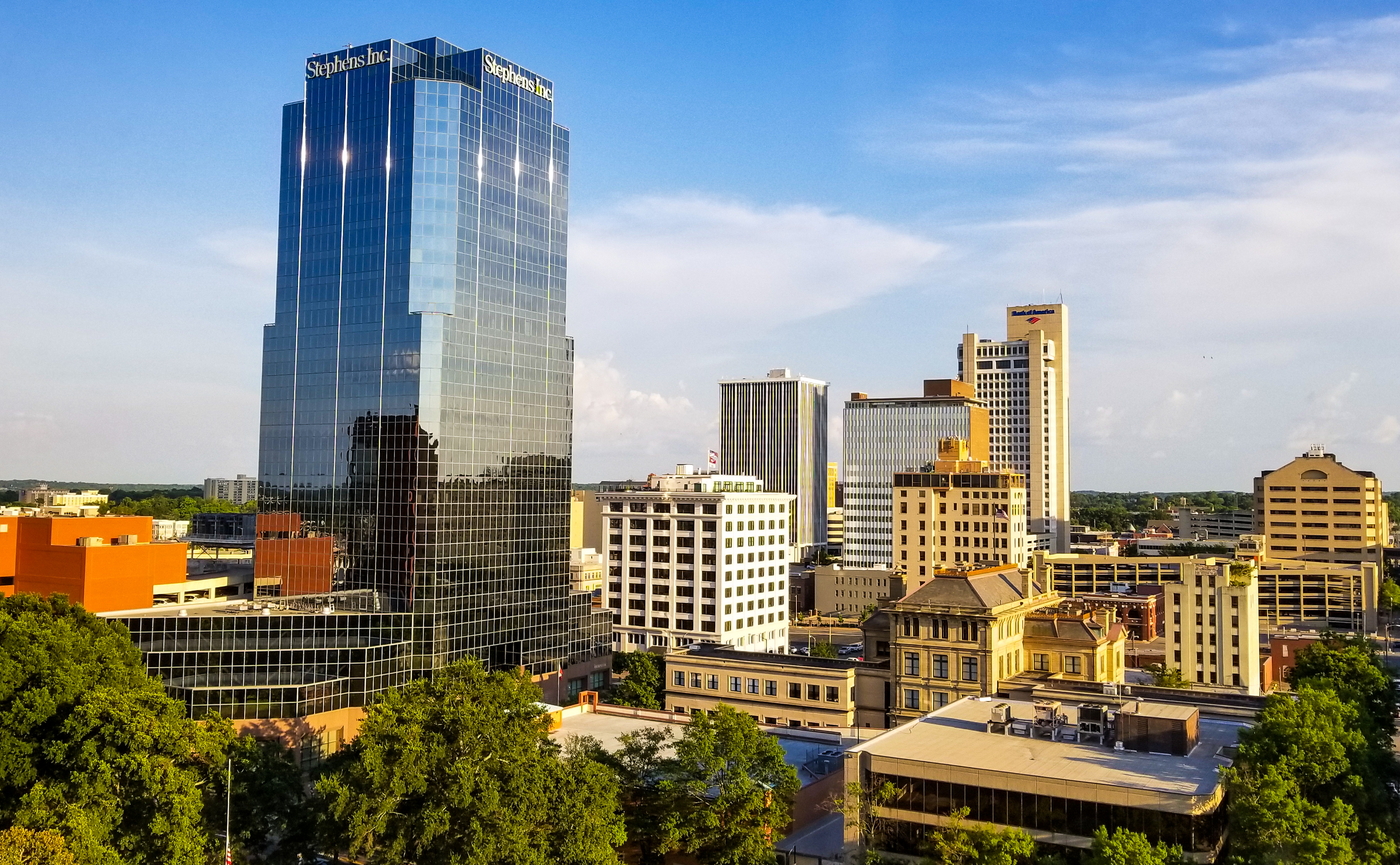
Central Arkansas, comprising Little Rock, North Little Rock, Conway, and surrounding communities, is Arkansas’s largest metropolitan area and its political, economic, and cultural center. The region sits where five geographic areas converge and is divided by the Arkansas River, which supports barge traffic to the Port of Little Rock. Little Rock is the state capital and home to two Fortune 500 companies, Arkansas Children’s Hospital, and UAMS. Historic landmarks, major museums, universities, and a growing urban core make the metro a prominent center in the South.
Recreational Delights
Outdoor recreation centers on the Arkansas River and the region’s wooded hills, wetlands, and parks. The Arkansas River Trail connects Little Rock and North Little Rock for walking and cycling, while Pinnacle Mountain State Park offers hiking, wildlife viewing, and panoramic overlooks. The Arkansas Arboretum adds interpretive trails and native plantings near Pinnacle Mountain. Burns Park provides extensive recreational space, and Bayou Meto Urban Canoe Trail is suited to paddling and nature exploration. Families can visit the Little Rock Zoo, Willow Springs Water Park, and T. R. Pugh Memorial Park, home to the Old Mill associated with Gone With the Wind. River Market Artspace and Park combines open space with downtown cultural activity, while Wildwood Park for the Arts hosts seasonal festivals and outdoor performances.
Culinary Scene
Central Arkansas’s food culture blends Southern comfort cooking, barbecue, Delta and Arkansas River Valley traditions, and increasingly diverse international influences. Little Rock’s River Market District is the metropolitan area’s best-known dining and gathering hub, combining restaurants, vendors, public space, and downtown entertainment. North Little Rock’s Argenta Historic District and Argenta Plaza provide another concentrated setting for locally owned restaurants, cafés, and nightlife. Conway adds a lively college-town dining scene shaped by its universities, while neighborhoods throughout Little Rock offer soul food, contemporary Southern cuisine, Mexican and Asian options, bakeries, and craft beverages. Local dining commonly emphasizes catfish, barbecue, fried chicken, vegetables, biscuits, and other regional staples, alongside farm-to-table and chef-driven restaurants.
Demographics
- The metropolitan area has 758,629 residents, making it Arkansas’s largest population center and a major political, economic, educational, and cultural hub.
- Median age is 37.6, slightly younger than the U.S. median of 38.9, reflecting a broad mix of students, working-age residents, families, and retirees.
- Median household income is $67,154, below the U.S. median of $80,734, while the region includes diverse communities across Pulaski, Faulkner, Saline, Lonoke, Grant, and Perry counties.
Population
758,629
Growth 0.67%
Households
311,547
Growth 1.64%
Median Age
37.6
US Median Age 38.9
Median Household Income
$67,154
US Median Household Income $80,734
Radius Metrics Highlights in 3-mile radius
27,217
Total population
0%
5 year population growth projection
10,126
Total households
$23,141
Per capita income
| 1 Mile | 3 Miles | 5 Miles | |
|---|---|---|---|
| Total population | 6,197 | 27,217 | 40,836 |
| 5 year projected total population | 5,353 | 27,318 | 42,050 |
| Total households | 2,546 | 10,126 | 14,861 |
| Current Median Household Income | $39,650 | $38,057 | $40,526 |
| 5 year projected median household income | $47,288 | $43,846 | $48,102 |
| Current Per Capita Income | $22,222 | $23,141 | $23,578 |
| 5 year projected per capita income | $25,494 | $27,570 | $29,023 |
| Median home value | $68,639 | $85,049 | $91,482 |
Entertainment
Arkansas Museum of Fine Arts
Arkansas Repertory Theatre
Robinson Center Music Hall
William J. Clinton Presidential Center
Quality of Life
Central Arkansas offers a relatively affordable metropolitan lifestyle with major healthcare, educational, cultural, and recreational assets. Residents benefit from extensive parks, river access, museums, universities, and a central transportation position. Income levels trail the national median, but the region’s capital-city amenities, expanding suburban communities, and varied employment base support a balanced quality of life.
2022 Population by age
6%
0-4 Years
20%
5-19 Years
7%
20-24 Years
27%
25-44 Years
24%
45-64 Years
16%
65+ Years
Employers
4%
Unemployment rate
Employment sectors
Health Care and Social Assistance
18.26%
Retail Trade
12.79%
Educational Services
9.52%
Manufacturing
7.78%
Construction
7.4%
Public Administration
6.77%
Professional, Scientific, and Technical Services
6.56%
Finance and Insurance
6.3%
Accommodation and Food Services
6.19%
Transportation and Warehousing
5.37%
Administrative and Support and Waste Management Services
3.95%
Wholesale Trade
2.52%
Other
6.58%