
Firehouse Subs-Salsas Mexican
Closed506 N Hwy 19, Palatka, FL 32177
Ocala, FL
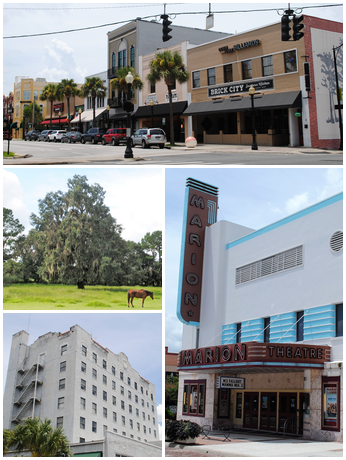
Ocala is the county seat of Marion County in North Central Florida and the principal city of a fast-growing metropolitan area. Known worldwide as the “Horse Capital of the World,” it is surrounded by more than 400 Thoroughbred farms and training centers, rolling pastureland, and celebrated equestrian venues. The city also combines historic character—including its preserved “Brick City” architecture and Fort King heritage—with easy access to Silver Springs, Rainbow Springs, the Ocala National Forest, and the Florida Trail. Its central location along I-75 makes Ocala a convenient base for exploring Central and North Florida.
Recreational Delights
Outdoor recreation is one of Ocala’s defining attractions. Silver Springs State Park offers glass-bottom boat tours, kayaking, canoeing, wildlife viewing, and trails along the spring-fed Silver River. Rainbow Springs State Park provides swimming, tubing, paddling, hiking, and picnic areas amid lush scenery. The expansive Ocala National Forest supports hiking, camping, horseback riding, fishing, boating, swimming, and exploration of springs and forest roads; the Florida National Scenic Trail passes through it. The Ocklawaha River adds opportunities for paddling and wildlife observation. Within the city, 43 park facilities provide sports fields, playgrounds, walking areas, and community recreation. Equine enthusiasts can attend competitions, demonstrations, and major shows at the World Equestrian Center, HITS, and the Florida Horse Park, while the Ocala Historic District offers leisurely walks past Victorian homes and notable historic buildings.
Culinary Scene
Ocala’s culinary scene reflects Central Florida’s blend of Southern, Floridian, and increasingly diverse influences. Downtown and the surrounding historic districts offer locally owned restaurants, cafés, bakeries, bars, and casual dining in and around restored brick buildings. Visitors can find familiar American and Southern fare alongside Mexican, Latin American, Italian, Asian, barbecue, seafood, and farm-inspired dishes. The city’s agricultural setting supports a growing interest in locally sourced ingredients, farmers markets, craft beverages, and food-centered community events. Dining near Silver Springs and along major corridors such as US 27, US 301, US 441, and State Road 200 provides additional variety, from convenient national establishments to independent eateries. Equestrian events at the World Equestrian Center and other horse venues also create seasonal hospitality and dining activity, bringing visitors and competitors from across the country and internationally.
Demographics
- The supplied regional demographic profile lists 400,078 residents, with a median age of 47.9—about nine years older than the U.S. median of 38.9—reflecting Ocala’s appeal to retirees as well as established households.
- Median household income is $61,010, below the supplied U.S. median of $80,734. In the city, recent American Community Survey data reports approximately $61,814 and a 24.4% poverty rate.
- Ocala’s 2020 city population was 63,591. The city’s population was 59.98% White and 19.33% African American, while Hispanic or Latino residents of any race represented 17.13%.
Population
400,078
Growth 3.19%
Households
164,881
Growth 3.18%
Median Age
47.9
US Median Age 38.9
Median Household Income
$61,010
US Median Household Income $80,734
Education
College of Central Florida
Rasmussen University Ocala campus
Webster University Ocala Metropolitan Campus
Marion County Public Schools
Entertainment
World Equestrian Center
Appleton Museum of Art
Silver Springs State Park
Marion County Museum of History
Quality of Life
Ocala offers a relaxed, comparatively accessible lifestyle shaped by mild winters, abundant springs and forests, historic neighborhoods, and a strong equestrian identity. Healthcare is provided by AdventHealth Ocala and HCA Florida hospitals, while I-75 and major U.S. highways support regional mobility. Residents also benefit from parks, libraries, cultural attractions, and a lower-cost setting than many larger Florida metros, though poverty and income disparities remain important challenges.
2022 Population by age
5%
0-4 Years
16%
5-19 Years
5%
20-24 Years
22%
25-44 Years
24%
45-64 Years
29%
65+ Years
Employers
5%
Unemployment rate
Employment sectors
Health Care and Social Assistance
15.79%
Retail Trade
14.86%
Construction
9.67%
Accommodation and Food Services
7.92%
Educational Services
7%
Manufacturing
6.71%
Administrative and Support and Waste Management Services
6.62%
Transportation and Warehousing
5.56%
Public Administration
5.35%
Professional, Scientific, and Technical Services
5.04%
Finance and Insurance
4.05%
Real Estate and Rental and Leasing
2.78%
Arts, Entertainment, and Recreation
2.37%
Wholesale Trade
2.11%
Agriculture, Forestry, Fishing, and Hunting
2.1%
Other
2.06%